Pterinochilus murinus Care Guide: Enclosure, Feeding, Lifespan & Care Tips (2026)
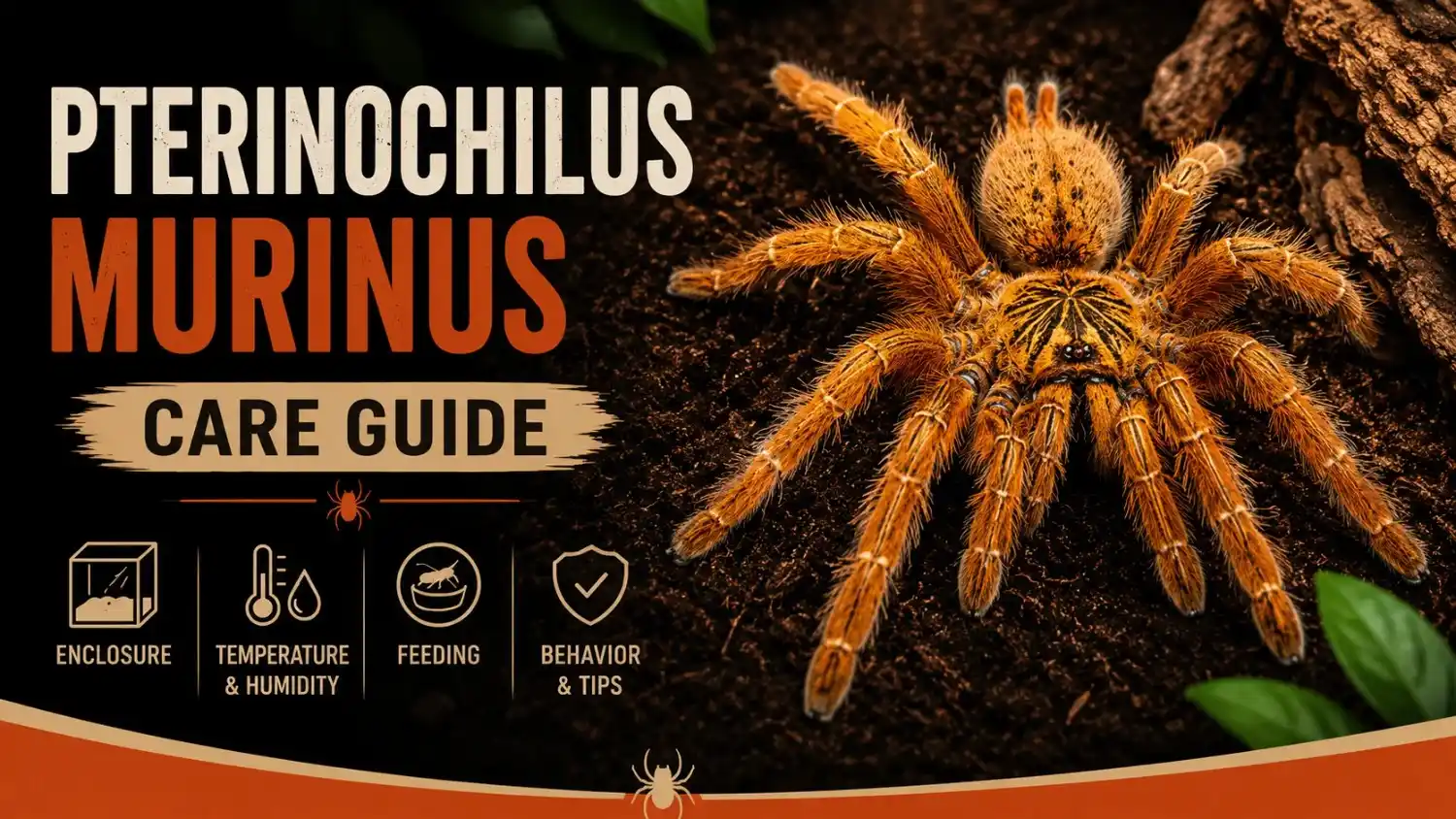
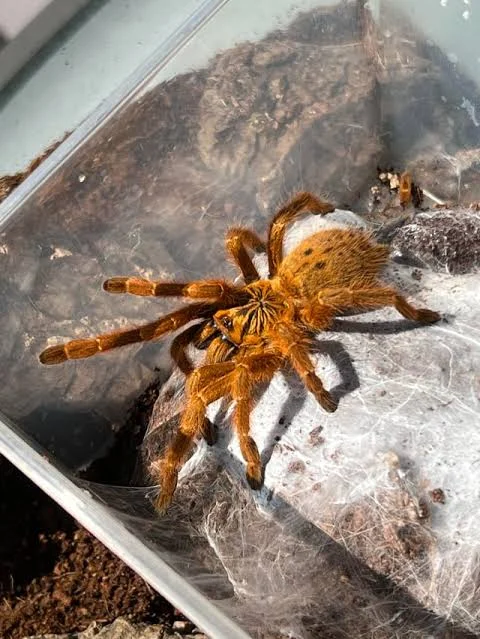
The Pterinochilus murinus, commonly known as the Orange Baboon Tarantula, is one of the most striking and well-known African tarantulas in the hobby. Its bright orange body, dark starburst markings, fast growth and impressive webbing make it an attractive display species. However, it is also famous for its speed and defensive behaviour, which means it is better suited to experienced tarantula keepers.
The abbreviation OBT originally stands for Orange Baboon Tarantula, although some hobbyists jokingly call it the “Orange Bitey Thing.” This nickname reflects the species’ intimidating reputation, but it does not mean the spider is constantly trying to attack. In most cases, an OBT will choose to retreat into its burrow or web tunnel when it feels disturbed. Defensive behaviour is more likely when the spider feels trapped, exposed or repeatedly disturbed.
This species is generally hardy and does not require a complicated care routine. It can thrive in captivity when provided with a secure enclosure, enough substrate, good ventilation, a suitable retreat and constant access to clean water. The greatest challenge is not maintaining the enclosure but safely working around such a fast and defensive spider.
Quick Facts
| Feature | Details |
|---|---|
| Scientific name | Pterinochilus murinus |
| Common name | Orange Baboon Tarantula |
| Abbreviation | OBT |
| Native region | Africa |
| Adult size | Around 4 to 6 inches |
| Lifestyle | Terrestrial, burrowing and heavy webbing |
| Growth rate | Fast |
| Female lifespan | Commonly 10 years or longer |
| Male lifespan | Usually 3 to 4 years |
| Temperament | Fast and defensive |
| Experience level | Intermediate to advanced |
| Handling | Not recommended |
Appearance and Natural Habitat
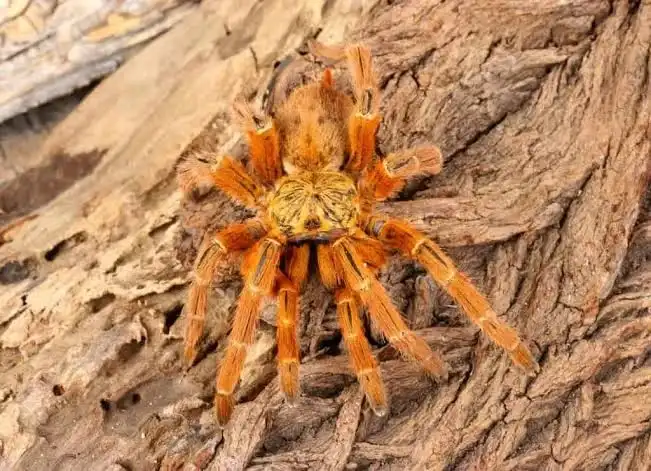
The Orange Baboon Tarantula is best known for its beautiful orange colour. Many specimens have bright orange legs, a darker abdomen and a black or brown starburst pattern across the carapace. However, not every individual looks exactly the same. Some may appear reddish, brownish or darker depending on their natural colour form, age and recent molt.
Females usually develop a heavier body and thicker legs, while mature males become slimmer and more long-legged. Adult females may reach a leg span of approximately 4 to 6 inches. Males can reach a similar leg span but usually appear smaller because of their lighter body structure.
Young spiderlings may not display the same intense orange colour as adults. Their appearance becomes more noticeable as they grow and pass through several molts. The colour is often brightest shortly after a molt, while older exoskeletons may appear duller.
In nature, Pterinochilus murinus is found across different parts of Africa. It is an adaptable species that may live in dry grasslands, scrub areas and other warm environments. It creates retreats beneath rocks, tree roots, bark and other protected spaces.
The OBT is often described as a terrestrial tarantula, but it also shows strong burrowing and webbing behaviour. Some individuals dig deep underground, while others create thick web tunnels above the substrate. Captive enclosures should therefore allow both behaviours instead of forcing the spider to live in only one type of setup.
A properly designed enclosure should contain deep substrate for digging, a partially buried hide and several secure objects that can be used as web anchor points. Once settled, the tarantula may cover a large portion of its enclosure with silk. This is normal and should not be treated as a mess that needs to be removed.
Behaviour and Temperament
The Pterinochilus murinus is extremely fast. It can move across an enclosure within seconds and may quickly change direction when disturbed. This speed is one of the main reasons the species is not recommended for complete beginners.
When it feels threatened, the tarantula may run into its retreat. If escape is not possible, it may raise its front legs, display its fangs or strike toward the disturbance. This reaction is defensive rather than aggressive. The spider is usually trying to protect itself instead of actively chasing a person.
Providing a proper retreat can reduce unnecessary defensive encounters. An OBT that feels secure inside its burrow or web tunnel is more likely to hide when the enclosure is opened. A spider kept in an empty enclosure with nowhere to retreat may remain exposed and react more strongly during feeding and maintenance.
Heavy webbing is one of the most interesting behaviours of this species. It may cover the substrate, cork bark, artificial plants, decorations and sometimes even the water dish. The web allows the spider to detect movement and vibrations throughout the enclosure.
The OBT is also a strong feeder. It often responds quickly when prey touches the web. This feeding response can be exciting to observe, but keepers should not confuse it with aggression. The spider is reacting naturally to movement within its hunting area.
Direct handling should never be attempted. Even an individual that appears calm can suddenly run or become defensive. Handling offers no benefit to the tarantula and creates unnecessary risks of biting, escaping or falling.
Enclosure Setup
A secure and well-planned enclosure for Pterinochilus murinus is the most important part of OBT care. An adult can usually be kept in an enclosure measuring approximately 10 to 12 inches in length and 8 to 10 inches in width. The exact dimensions can vary depending on the size of the spider, but the enclosure should provide enough space for movement, burrowing and web construction.
A very large enclosure is not always better. Too much empty space can make it difficult for the spider to locate prey and can make routine maintenance more dangerous. The enclosure should feel secure rather than open and exposed.
The lid must close firmly. Check all doors, ventilation holes, feeding ports and corners before introducing the tarantula. Even a small opening can become a possible escape route. Front-opening enclosures can be used, but the door should not open directly beside the spider’s main retreat.
| Setup Element | Recommendation |
|---|---|
| Enclosure size | 10–12 inches long for an adult |
| Substrate | 4–6 inches deep |
| Hide | Partially buried cork bark |
| Ventilation | Good cross-ventilation |
| Water dish | Shallow dish with fresh water |
| Moisture | Mostly dry with one lightly moist corner |
Provide around 4 to 6 inches of substrate for an adult. Smaller juveniles can be given slightly less, while spiderlings should still have enough material to dig. Suitable substrate options include coconut fibre, organic topsoil or a mixture of both.
The substrate should be firm enough to support a burrow. Very loose or fluffy material may collapse when the tarantula digs. It should also be free from fertilizers, pesticides and sharp objects.
Place a piece of curved cork bark partly into the substrate to create a starter hide. The spider may dig underneath it and connect the area with web tunnels. Artificial plants, bark pieces and small branches can be added as web anchor points.
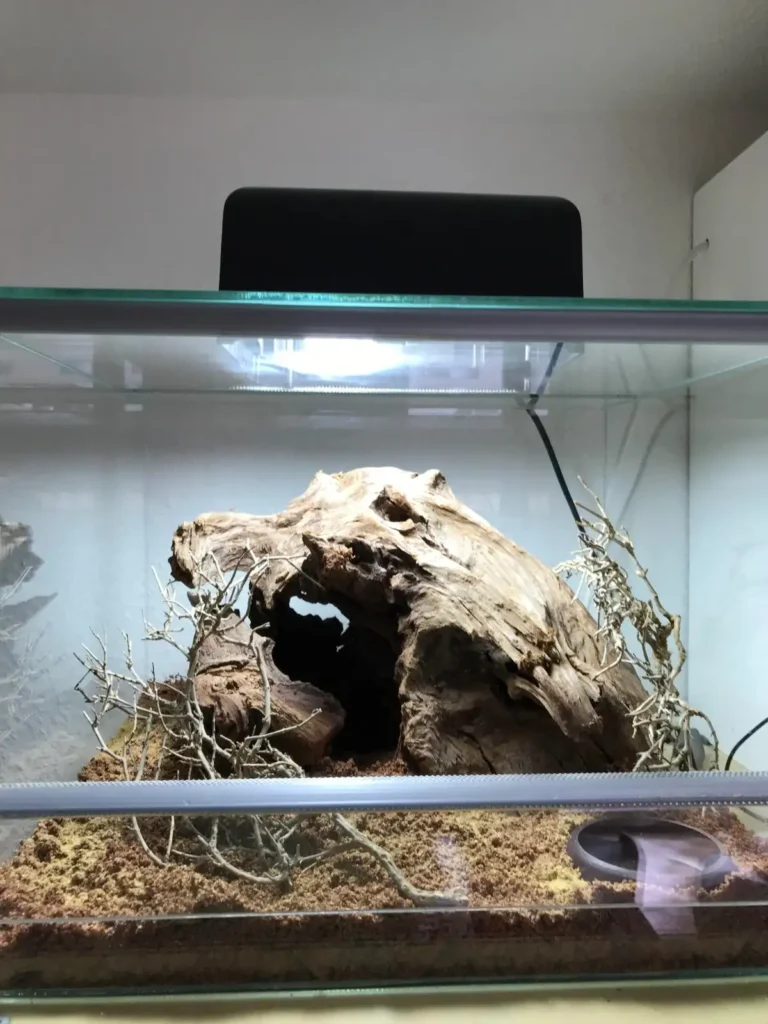
All decorations must be stable. Heavy stones or objects that could collapse should be avoided. The tarantula may dig underneath decorations, causing unsecured items to fall into its burrow.
Do not leave too much empty height between the substrate and the lid. Although the OBT can climb, it still has a heavy abdomen that may rupture after a serious fall. Deep substrate reduces the falling distance and provides a safer environment.
Cross-ventilation is strongly recommended. Small ventilation holes should be placed on more than one side of the enclosure so fresh air can move through it. Good airflow helps prevent mold, stale air and excessive moisture.
A shallow water dish should always be available. The tarantula may place substrate inside the dish or cover it with webbing. This is normal behaviour. Clean and refill the dish when needed without destroying the surrounding web.
Temperature and Humidity
The Pterinochilus murinus usually does well at normal warm room temperatures. A comfortable range is approximately 72 to 80°F, or 22 to 27°C. Small temperature changes between day and night are generally not a problem.
In most homes, additional heating is unnecessary. Heat lamps should not be used because they can dry the enclosure quickly and create dangerously hot areas. Strong light can also disturb a tarantula that prefers darker retreats.
Heat mats should never be placed directly underneath the enclosure. Tarantulas often dig deeper to escape heat. If the heat source is below the substrate, the spider may move closer to the hottest part instead of finding relief.
When extra warmth is genuinely required, it is safer to heat the room rather than the individual enclosure. A digital thermometer can be used to monitor the surrounding temperature.
Adult OBTs generally do not require a constantly humid enclosure. Most of the substrate can remain dry as long as fresh water is always available. A small corner may occasionally be moistened to create a light moisture gradient, especially during very dry weather.
The entire enclosure should never remain wet or swamp-like. Constantly damp substrate combined with poor ventilation can encourage mold and create unhealthy conditions.
Spiderlings require slightly more attention because small containers can dry out quickly. A portion of the substrate may be kept lightly moist, but the container must still have good ventilation. Light moisture is different from soaking the entire setup.
Exact humidity percentages are not always useful. Keepers often make the mistake of repeatedly spraying the enclosure to reach a specific number. It is better to observe the actual conditions. Standing water, heavy condensation, stale air and constantly wet substrate usually indicate that the enclosure is too damp. If you want to read more about another tarantulas then you can read our another helpful article’s.
Feeding and Diet
The OBT normally has a strong appetite and fast feeding response. It can be fed crickets, dubia roaches, red runner roaches, mealworms and other appropriately sized captive-bred insects.
Wild insects should not be used because they may have been exposed to pesticides, parasites or other harmful substances. Feeder insects should come from a reliable source and should be properly cared for before being offered.
The size of the prey should be suitable for the tarantula. As a general rule, the feeder should not be larger than the spider’s abdomen. Large prey can stress or injure a small tarantula.
Spiderlings can be offered pinhead crickets, small roach nymphs or pieces of freshly killed prey. They may be fed once or twice a week, depending on their abdomen size and growth.
Juveniles usually eat around once a week. Adults can be offered one suitable meal every 7 to 10 days. However, feeding schedules should remain flexible. The spider’s abdomen is a better guide than a fixed calendar.
If the abdomen appears very large, feeding should be reduced. An overfed tarantula may become more vulnerable to injury if it falls. If the abdomen appears unusually small, slightly more frequent meals may be offered.
Place the feeder near the entrance of the web or retreat. The OBT will detect the vibrations and usually capture the prey when it is ready. Do not push insects deep inside the burrow.
Uneaten prey should be removed within approximately 24 hours. This is particularly important if the tarantula appears to be entering premolt. Crickets can disturb or injure a vulnerable spider during the molting process.
Food refusal is not always a sign of illness. Tarantulas commonly stop eating before a molt. Adults may also fast after a large meal or during seasonal changes. As long as the abdomen remains in good condition and water is available, temporary fasting is usually normal.
Molting and Routine Care
Molting is the process through which a tarantula sheds its old exoskeleton and grows. Before a molt, the OBT may become less active, refuse food and spend more time inside its retreat.
The spider may close the entrance of its web tunnel using silk and substrate. This behaviour should not be disturbed. Do not open the retreat to check whether the tarantula is still alive.
Its colours may become dull before a molt, and the abdomen may appear darker. Any live feeder insects should be removed when premolt behaviour is noticed.
The OBT may molt deep inside its retreat where it cannot be observed. After molting, it may push the old exoskeleton outside. In other cases, the molt remains hidden within the tunnel.
Do not feed immediately after a molt. The new exoskeleton and fangs need time to harden. Small juveniles may be ready to eat after approximately one week, while large adults may need 10 to 14 days.
The fangs may appear pale, white or reddish immediately after molting. Feeding should begin only when they have returned to a dark colour.
Routine enclosure cleaning should remain minimal. Refill the water dish, remove uneaten prey and collect visible food remains using long forceps. There is usually no need to replace all the substrate during normal maintenance.
A complete enclosure clean may be required after serious mold, flooding, contamination or a major pest problem. Unnecessary deep cleaning destroys the spider’s established retreat and causes avoidable stress.
Rehousing and Safety
Rehousing an OBT requires planning. The new enclosure should be completely prepared before the old one is opened. Add the substrate, cork bark, water dish and decorations in advance.
Close the room’s doors and windows and remove pets or unnecessary people from the area. Block obvious gaps beneath furniture where an escaped tarantula could hide.
Working inside a large empty storage container can provide an additional barrier. A bathtub may also be used if the drain is fully closed and the surface is dry.
Keep a clear catch cup, secure lid and long soft paintbrush nearby. Never attempt to pick up the tarantula with your hands or grab it with forceps.
Locate the spider before moving decorations. Slowly guide it toward the catch cup or new enclosure using the paintbrush. Avoid fast movements, sudden vibrations and repeated poking.
Once the tarantula enters the catch cup, carefully cover the opening. Move the cup into the new enclosure and allow the spider to exit without placing your hands in its path.
A bite from this species can cause severe pain, swelling and muscle cramping. Anyone bitten should clean the area and seek medical advice, especially if intense pain, widespread cramps, breathing problems or other serious symptoms appear.
Common Care Mistakes
One of the most common mistakes is providing an empty enclosure with shallow substrate. An exposed tarantula may feel unsafe and react defensively whenever the enclosure is opened.
Using too much moisture is another common problem. The OBT needs access to water, but adults should not be kept in constantly wet conditions.
Poor ventilation can cause stale air, mold and excessive condensation. Adding more water will not solve dehydration if the enclosure lacks proper airflow.
Keepers should not destroy the web whenever it looks untidy. The web is part of the tarantula’s shelter and hunting system.
Another serious mistake is working without a catch cup. Even routine tasks can become unpredictable with such a fast species.
Handling should always be avoided. It creates unnecessary danger for both the keeper and the tarantula.
Frequently Asked Questions
Is Pterinochilus murinus suitable for beginners?
The OBT is not usually recommended as a first tarantula. Its care requirements are simple, but its speed and defensive behaviour make enclosure maintenance challenging for inexperienced keepers.
How often should an OBT be fed?
Spiderlings may be fed once or twice a week. Juveniles can usually eat once a week, while adults may be offered food every 7 to 10 days. Adjust the schedule according to the abdomen size.
Does an OBT require high humidity?
Adults generally do not require high humidity. Keep most of the substrate dry, provide fresh water and maintain good ventilation. Spiderlings may be kept slightly more moist.
Why does my OBT web the entire enclosure?
Heavy webbing is natural. The spider uses silk to build tunnels, detect prey and move safely around its enclosure.
Can an Orange Baboon Tarantula be handled?
Handling is strongly discouraged. The species is fast, defensive and capable of delivering a painful bite. It can also be injured if dropped.
Conclusion
The Pterinochilus murinus is a beautiful and fascinating tarantula for experienced keepers. Its vivid colour, rapid growth, strong feeding response and complex web tunnels make it an excellent display species.
Despite its reputation, the OBT is not difficult to maintain when its enclosure is designed properly. Deep substrate, a secure hide, web anchor points, cross-ventilation and clean water cover most of its essential needs.
The species should always be treated with respect. It should not be handled, disturbed unnecessarily or rehoused without preparation. Keepers who use safe maintenance methods and allow the tarantula to establish a secure retreat can observe its natural behaviour while reducing risks for both themselves and the spider.