Goliath Birdeater (Theraphosa blondi) Care Guide: The Complete Guide to the World’s Largest Spider
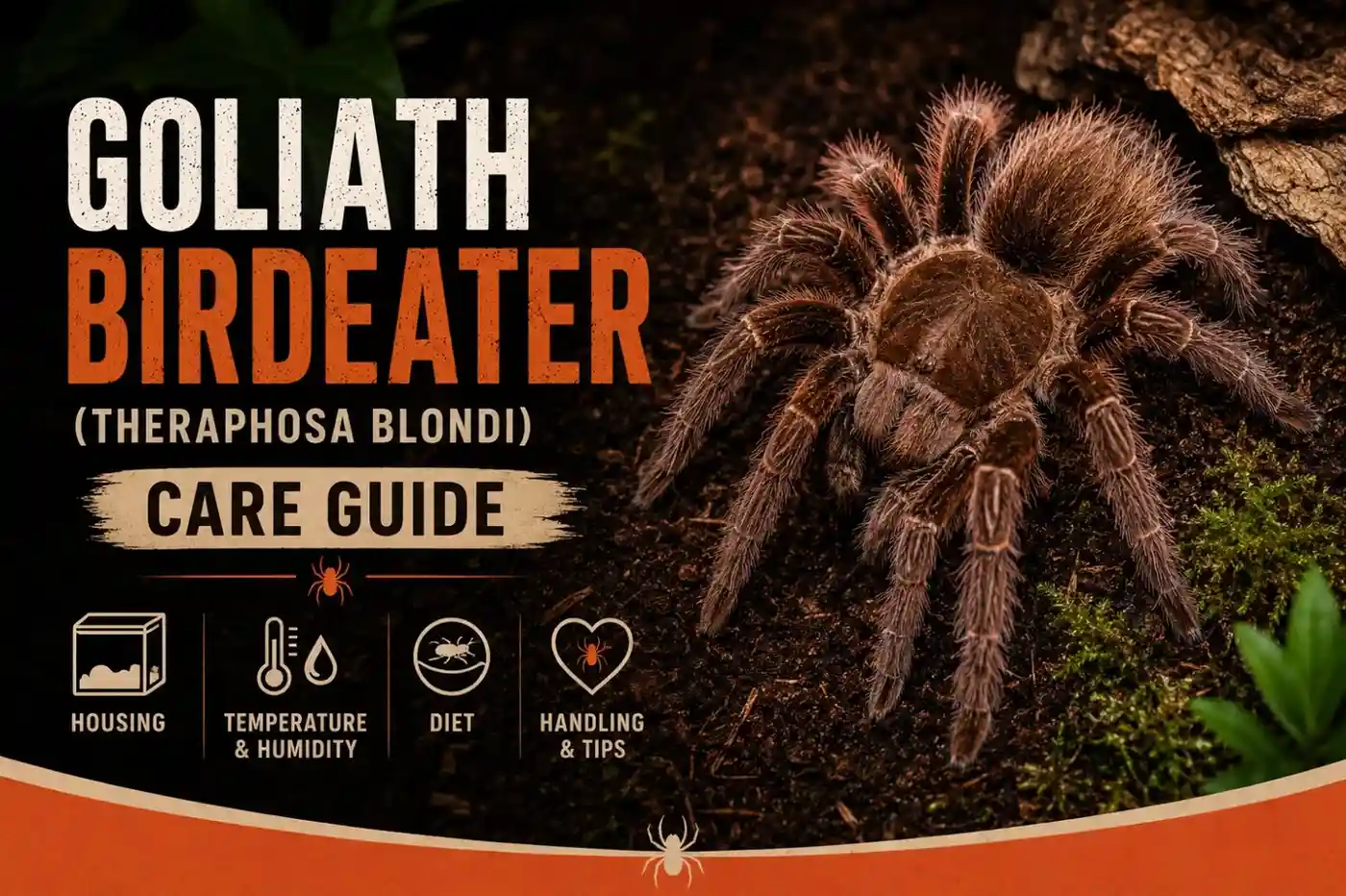
The Goliath birdeater is the biggest spider on Earth. It can grow as wide as a dinner plate, weigh as much as a small apple, and hiss loudly enough to be heard across a room. For many people, it is both the spider of their nightmares and the spider of their dreams. But here is the honest truth most articles skip: despite its scary name, the Goliath birdeater almost never eats birds, its bite is milder than people expect, and it is not a beginner’s pet. This guide explains everything in plain language — what Theraphosa blondi really is, how big it truly gets, whether it is dangerous, and exactly how to care for one at every stage of its life. No hype, just clear facts anyone can follow.
Goliath Birdeater at a Glance
| Attribute | Detail |
|---|---|
| Scientific name | Theraphosa blondi |
| Adult leg span | 11–12 inches (28–30 cm) |
| Weight | Up to 6 oz (175 g) |
| Temperament | Defensive and skittish |
| Difficulty | Advanced |
| Enclosure | Wide floor space, deep substrate for burrowing |
| Temperature | Room temperature, about 70–78°F (21–26°C) |
| Humidity | Moderate to high — moist lower substrate, always a water dish |
| Diet | Large live insects; occasionally small animals |
| Handling | Not recommended |
Is the Goliath birdeater right for you?
Theraphosa blondi is a fantastic choice if you are an experienced keeper who wants a true showpiece — a huge, impressive animal to watch and care for. It is a poor choice if you are new to tarantulas, want a spider you can hold, or cannot keep its enclosure warm and slightly damp all year. In short: it is a spider you admire from the other side of the glass, not one you play with.
What Is a Goliath Birdeater?
The Goliath birdeater (Theraphosa blondi) is a giant tarantula that lives on the floor of the rainforest in northern South America. Its home countries include northern Brazil, French Guiana, Guyana, Suriname, and southern Venezuela — mostly in warm, wet, swampy parts of the Amazon. It is a heavy, hairy spider, colored light-to-dark brown with a slight golden shine. Instead of spinning a web to catch food, it digs a deep burrow in the soft ground and lines it with silk.
At night it waits near the entrance and ambushes anything small enough to eat. During the day it stays hidden underground where it is safe, cool, and moist. That “warm, wet, underground” lifestyle is the key to keeping one correctly. This is a rainforest animal that loves humidity and darkness — the opposite of a desert spider like the rose hair.
Quick Species Snapshot
- Common names: Goliath birdeater, Goliath bird-eating spider, Goliath tarantula
- Scientific names: Theraphosa blondi, plus close relatives Theraphosa stirmi and Theraphosa apophysis
- Type: New World, terrestrial (ground-dwelling) burrower
- Native range: Northern Brazil, French Guiana, Guyana, Suriname, and southern Venezuela
- Body length: About 4–5 inches (11–13 cm)
- Leg span: Up to 11–12 inches (28–30 cm)
- Weight: Up to 6 ounces (about 175 g) — the heaviest spider in the world
- Urticating (irritating) hairs: Yes — Type III, among the most irritating of any tarantula
- Growth rate: Fast
- Lifespan: Females up to 25 years; males only about 3–6 years
- Experience level: Advanced — not for beginners
Meet the Three Goliaths: blondi, stirmi, and apophysis
Here is something most guides get wrong. There is not just one “Goliath birdeater.” There are three closely related giant tarantulas that people often mix up, and knowing the difference helps you buy the right one.
| Species | Common name | What makes it different |
|---|---|---|
| Theraphosa blondi | Goliath birdeater | The classic and most common one; the heaviest |
| Theraphosa stirmi | Burgundy Goliath birdeater | Slightly slimmer; often sold as T. blondi by mistake |
| Theraphosa apophysis | Goliath Pink Foot | Babies have pink “boots” on their feet; slimmer legs |
The good news for a keeper: all three need almost exactly the same care. The names matter mostly when you are buying, so you know what you are getting. Many spiders sold as Theraphosa blondi are actually T. stirmi — so a seller who is careful about the exact name usually knows their spiders well.
Why Is It Called a “Birdeater” If It Doesn’t Eat Birds?
This is the most famous myth about the spider, and the real story is a good one.
In the early 1700s, a scientist and artist named Maria Sibylla Merian traveled to South America and painted a large tarantula eating a hummingbird. That single picture gave this whole group of spiders the “bird-eating” name — even though eating a bird is actually very rare for them. So does Theraphosa blondi ever eat birds? Once in a while, yes — it is big enough to.
But it is a ground-dwelling spider, so it almost never climbs to reach a nest. In real life, its meals are things it finds on the forest floor. The name stuck for 300 years, but it was always a bit of an exaggeration.
How Big Is the Goliath Birdeater, Really?
Its size is the whole reason people are fascinated by it, so let’s get the numbers right — because many websites get them wrong.
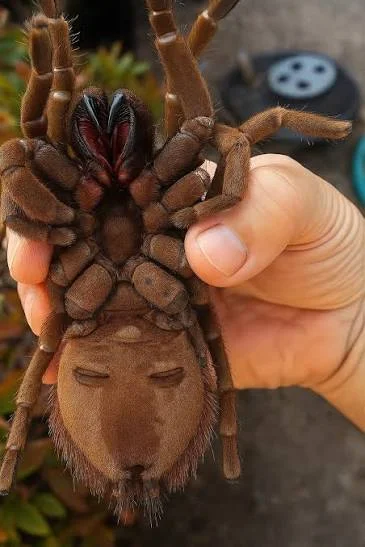
Weight: The Goliath birdeater can weigh up to about 6 ounces (175 grams) — roughly a small apple, a baseball, or a billiard ball. This is the record that makes it famous: it is the heaviest spider in the world.
Leg span: Its legs can spread about 11 to 12 inches (28–30 cm) — close to the width of a dinner plate.
Body length: Its body alone (not counting legs) can reach about 5 inches (13 cm), roughly the size of an adult’s fist.
Is it really the biggest spider? It depends how you measure. Theraphosa blondi wins on weight and body bulk — nothing beats it there. But the giant huntsman spider has slightly longer, thinner legs. So the Goliath is the heaviest and most massive spider, while the huntsman is the longest-legged. Both records are real; they just measure different things.
The “puppy-sized spider” story: In 2014, a scientist walking through the rainforest at night heard loud footsteps in the leaves. He thought it was a small mammal — but it was a Goliath birdeater, so big its feet actually made noise as it moved. He described it as feeling “the size of a puppy.” The story went viral, and it is true. This spider is big enough to be heard walking.
What Does the Goliath Birdeater Eat?
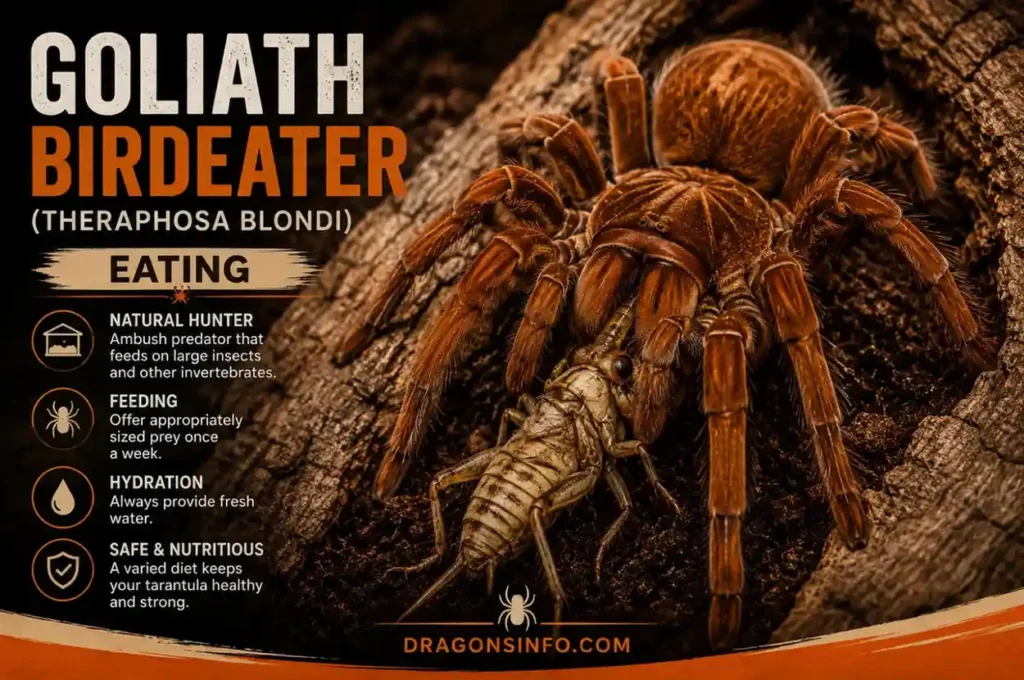
Despite the name, its real diet is down-to-earth. In the wild, Theraphosa blondi eats earthworms, large insects, and small animals like frogs, toads, and lizards. Now and then it takes a mouse, a small snake, or another spider. It is an opportunist — it eats whatever it can catch. Because it has poor eyesight, it does not hunt by looking. Instead, it feels tiny vibrations in the ground through sensitive hairs on its legs.
When prey walks past, the spider rushes out, grabs it with its fangs, and injects venom to stop it moving.Then comes the part that sounds like a horror movie: spiders cannot chew. So the Goliath drags its meal into the burrow, pumps in special juices that turn the insides to liquid, and drinks it — leaving behind an empty shell. It is strange, but it is a very efficient way to eat.
Is the Goliath Birdeater Dangerous to Humans?
This is the question everyone asks, so let’s answer it calmly.
Can it kill you? No. A Goliath birdeater cannot kill a healthy person. Its venom is weak compared to its scary size, and there are no records of anyone dying from its bite.
Venomous or poisonous? People mix these up. The spider is venomous, not poisonous. “Poisonous” means something harms you if you eat or touch it. “Venomous” means it injects venom through a bite. Theraphosa blondi has venom, but it is mild for humans.
What does a bite feel like? It has huge fangs — up to 1.5 inches (2–4 cm) long — big enough to break human skin. A bite would hurt, somewhere between a wasp sting and a deep pinch, with some redness and swelling that fades on its own. The spider also often gives a “dry bite,” biting in defense without using venom.
The bigger problem — itchy hairs: Honestly, the bite is not the main worry. Theraphosa blondi has some of the most irritating hairs of any tarantula (called Type III urticating hairs). When threatened, it kicks a cloud of tiny barbed hairs off its abdomen. On skin they itch and burn; near the eyes or nose they are much worse. This is a big reason you should never handle this spider and should always wash your hands after working near its enclosure.
Defense: Three Ways It Protects Itself
The Goliath birdeater has three defenses, and it usually uses them in order:
- Hissing (stridulation). It rubs the bristles on its legs together to make a hiss you can hear from about 15 feet away. This is a warning: back off.
- Kicking irritating hairs. If the warning is ignored, it flicks those itchy barbed hairs at the threat.
- Showing its fangs. As a last step, it rears up and lifts its front legs to show its huge fangs, ready to bite.
If you ever see a tarantula hiss or rear up, the right move is simple: give it space and close the enclosure.
Goliath Birdeater Enclosure Setup
If you are an experienced keeper ready for the challenge, here is how to keep Theraphosa blondi healthy at every stage of its life. Remember the golden rule: warm, slightly damp, and roomy, with deep ground to dig in.
Natural Habitat and What It Means for Setup
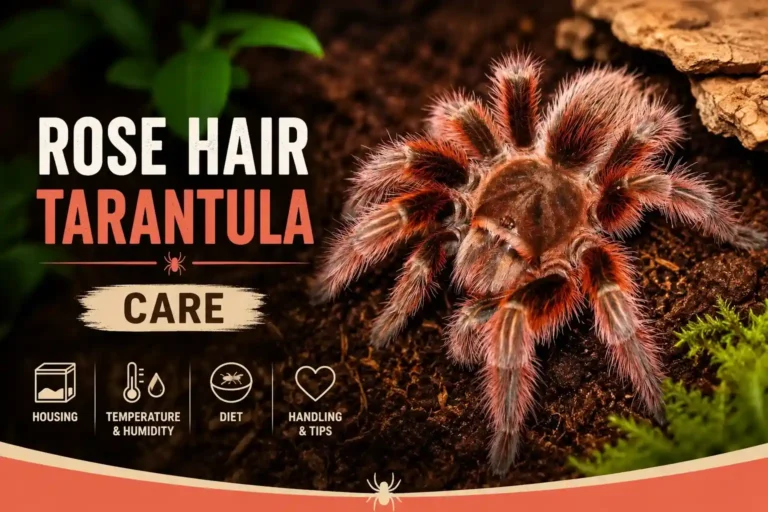
In the wild, the Goliath birdeater lives in tropical rainforests with soft, well-draining soil it can burrow into. To keep one happy in captivity, you copy that as closely as you can: deep, diggable substrate and steady moisture. Deep substrate does two jobs — it lets the spider burrow naturally, and it keeps this heavy spider low to the ground, which protects it from dangerous falls. if you want to read more about Rose Hair Tarantula then click on link for another most interesting article .
Housing and Substrate (by Life Stage)
The right enclosure changes as your spider grows. Here is the setup for each stage.
Spiderlings (babies)
- Enclosure: A small container such as a sling enclosure or a small acrylic cube. A baby lost in a huge tank struggles to find food.
- Substrate: Fill it at least two-thirds full with moist coconut fiber or a quality burrowing substrate.
- Moisture: Keep the substrate slightly damp (not soaking). Offer a tiny water dish, or gently drip water on one corner about once a week.
Juveniles (growing spiders)
- Enclosure: A medium enclosure that gives room to burrow but is not so large that feeding becomes hard.
- Substrate: Fill from half to two-thirds full so the spider can dig a proper burrow while staying safe from falls.
- Moisture: Keep it mostly dry with a full water dish, and overflow one corner now and then to create a damp patch.
- Extras: Add a half cork-bark hide and a shallow water dish sized to the spider.
Adults
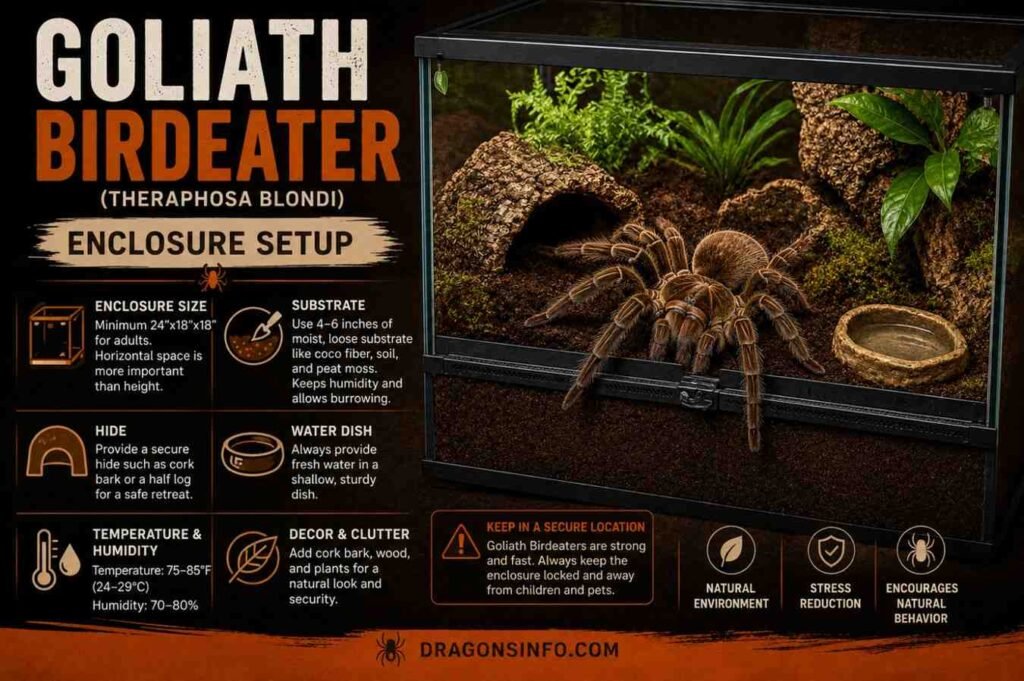
- Enclosure: A large enclosure — roughly an 18-inch cube or similar. It should be wider than it is tall, because height means dangerous falls for such a heavy spider.
- Substrate: Fill from half to two-thirds full with deep, diggable substrate.
- Extras: A secure cork-bark hide, a shallow water dish, and a tight, secure lid to prevent escapes. A front-opening door is ideal so you are not reaching down over a defensive spider.
Temperature and Humidity
Temperature: Normal room temperature is fine — about 70–78°F (21–26°C). The simplest rule in the hobby: if you are comfortable in the room, your tarantula usually is too. If your home gets cold, use a thermostat-controlled heat mat on the side of the enclosure — never a hot lamp or bulb, which can dry out and harm the spider.
Humidity: This is the biggest difference from desert tarantulas. Theraphosa blondi needs moderate to high humidity. Keep the lower layers of substrate moist for burrowing, but let the top layer dry out between waterings to prevent mold. Always provide a shallow water dish. Baby spiders especially can dry out and die if kept too dry — but you still need good airflow, because damp air with no ventilation grows dangerous mold. The goal is moist but fresh, not a sealed swamp.
Feeding Schedule (by Life Stage)
Feed live insects, and adjust the amount to your spider’s body. Here is a simple schedule for each stage.
| Life stage | How often | What to feed | Wait after a molt |
|---|---|---|---|
| Spiderling | About twice a week | Flightless fruit flies, or pre-killed tiny crickets/roach nymphs | 24–48 hours |
| Juvenile | Every 7–10 days | 2–3 small crickets or a medium dubia roach | 3–7 days |
| Adult | Every 2–3 weeks | 4–5 large crickets or 1 large dubia roach | 5–10 days |
The simple feeding rule — watch the abdomen: Look at the spider’s back section (the abdomen).
- If the abdomen is thinner than the widest part of its body, feed more, more often.
- If the abdomen is wider than its body, feed less, less often.
This keeps the spider from getting overweight, which can cause molting problems or make a fall more likely to rupture the abdomen.
A few feeding safety notes: Always remove uneaten insects within about 24 hours — a loose cricket can hurt your spider, especially during a molt. Keep prey no bigger than the spider’s body. And after any molt, wait until the new fangs are solid black and the exoskeleton is hard before feeding again.
Behavior and Temperament
The Goliath birdeater is best described as defensive, not aggressive. It would rather stay in its burrow than pick a fight, but it will stand its ground if disturbed — hissing, kicking hairs, or rearing up to show its fangs. It is fast and it is big, so calm, careful maintenance is important. This is a spider to watch, not to interact with.
Handling: Don’t
This one is simple. Do not handle a Goliath birdeater. It is fast, defensive, has a painful bite, and kicks some of the itchiest hairs in the hobby. There is no benefit to the spider, and every risk is on your side. Many keepers even wear gloves or eye protection during cleaning because of those hairs. Enjoy Theraphosa blondi as an animal to observe.
Molting: How It Grows
Like all spiders, the Goliath birdeater wears its skeleton on the outside. To grow, it must climb out of its old shell in a process called molting. When your spider stops eating, seals its burrow, and lies still — sometimes flipping onto its back — it is likely about to molt. Leave it completely alone, remove all live insects, and do not feed it until its new fangs have hardened (see the wait times in the feeding table). Molting also lets the spider regrow legs it has lost over time.
Lifespan: Females Live for Decades
One of the strangest facts about this spider is how differently males and females age. Females can live up to 25 years. Males usually live only about 3 to 6 years and die soon after they become adults. So if you want a long-lived pet, you want a female — and that is a real long-term commitment, like adopting an animal that could be with you for two decades.
Breeding Theraphosa blondi (Advanced)
Breeding the Goliath birdeater is challenging because of its size, its need for high humidity, and its defensive nature. Here is a simple overview for experienced keepers.
- Maturity: Males mature in about 2–3 years; females in about 3–4 years.
- Before pairing: Feed the female well first, so she is less likely to see the male as a meal. Slightly raising heat and humidity can help.
- Mating: Introduce the male into the female’s enclosure in the evening. He will tap and drum to signal himself. After mating, gently remove the male.
- Egg sac: A female may make an egg sac about 2–4 months after mating, holding 50 to 200 eggs. Keep humidity high (around 80–90%) with good airflow.
- Spiderlings: If left with the mother, babies usually emerge in about 6–8 weeks. Feed them tiny prey every few days and keep their humidity steady, since babies dry out easily.
Health and Warning Signs
- Dehydration is the most common avoidable problem. Always keep clean water available and the lower substrate slightly moist. A shrunken, wrinkled abdomen is a warning sign.
- Falls can be deadly because the spider is so heavy. This is why low enclosures and deep substrate matter so much.
- The “death curl.” A healthy spider that simply isn’t eating still sits normally. A spider curled up with its legs tucked under its body is in serious trouble — usually from dehydration — and needs water and expert help right away.
- Mold. If you smell mustiness or see fuzzy growth, improve airflow and let the top layer dry more between waterings.
Buying a Goliath Birdeater
If you decide to get one, buy a captive-bred Theraphosa blondi from a trusted breeder rather than a wild-caught spider. Captive-bred spiders are usually healthier, calmer, and free of parasites — and buying them does not put pressure on wild rainforest populations, which face real threats from habitat loss and over-collection. Also check the laws where you live before buying. Many places allow keeping tarantulas, but some regions and countries restrict exotic pets. A few minutes of research now can save a serious problem later.
Is the Goliath Birdeater Endangered?
You may read online that Theraphosa blondi is “endangered.” That is not quite accurate. It has not been officially assessed by the main global conservation list (the IUCN Red List), so it has no official status. That said, like many rainforest animals, it does face pressure from habitat loss and collection — which is exactly why buying captive-bred spiders is the responsible choice.
Frequently Asked Questions
Is the Goliath birdeater poisonous?
No. It is venomous, not poisonous, and its venom is mild for humans. A bite hurts a bit, like a wasp sting, but it is not dangerous unless you have an allergy.
Can a Goliath birdeater kill you?
No. There are no known human deaths from its bite. Its venom is weak, and it usually tries to scare threats away rather than bite.
How big does a Theraphosa blondi get?
Its legs can span up to 11–12 inches (about 30 cm) — around the size of a dinner plate — and it can weigh up to 6 ounces, making it the heaviest spider in the world.
Does the Goliath birdeater really eat birds?
Very rarely. Despite the name, it mostly eats insects, worms, frogs, and other small animals it finds on the ground. Eating a bird is the exception, not the rule.
Can you keep a Goliath birdeater as a pet?
Yes, but only for experienced keepers. Theraphosa blondi needs a warm, humid, roomy enclosure, should never be handled, and can live over 20 years. It is a spider to watch, not to hold.
What’s the difference between Theraphosa blondi, stirmi, and apophysis?
They are three closely related giant tarantulas. T. blondi is the classic, heaviest one; T. stirmi (Burgundy Goliath) is slightly slimmer; and T. apophysis (Goliath Pink Foot) has pink-tipped feet as a baby. All three need nearly identical care.
How much does a Goliath birdeater cost?
Prices vary by species, size, and where you live. Babies are cheaper, while confirmed adult females cost more. Because they can be tricky to import, they are often pricier than common beginner tarantulas.
Is it bigger than the giant huntsman spider?
By weight and body size, yes — the Goliath is far heavier and bulkier. By leg length, the giant huntsman edges it out with longer, thinner legs. So each holds a different “biggest spider” record.
Final Thoughts
The Theraphosa blondi is a true giant — the heaviest spider on the planet, big enough to be heard walking through the leaves. But behind the scary size and dramatic name is an animal far more shy than deadly: it would rather hiss and hide than bite, it barely ever eats birds, and its venom is weaker than a bee’s.
If you are an experienced keeper who can give it a warm, slightly damp, roomy home — deep substrate to burrow in, a steady water dish, and plenty of respect — it is one of the most jaw-dropping animals you can own. Keep it on its terms, watch rather than handle, feed by watching its abdomen, and leave it alone through every molt. Do that, and this misunderstood giant can thrive in your care for decades.