Psalmopoeus cambridgei Care Guide: Enclosure, Feeding, Lifespan & Care Tips (2026)

The Psalmopoeus cambridgei, commonly known as the Trinidad Chevron Tarantula, is one of the most impressive arboreal tarantulas in the hobby. Native to the tropical rainforests of Trinidad, this fast-growing species is admired for its striking chevron markings, heavy webbing, and remarkable climbing ability. Unlike many tarantulas that spend their lives underground, it lives high above the forest floor, building silk retreats inside tree hollows and behind loose bark.
Although it belongs to the New World tarantula family, Psalmopoeus cambridgei does not possess urticating hairs. Instead, it relies on speed and defensive displays to protect itself, making it better suited for keepers with some experience. Once established in a suitable enclosure, the Trinidad Chevron spends much of its time creating intricate web tunnels and waiting patiently for prey, making it one of the most rewarding display tarantulas to observe.
This guide covers everything you need to know about keeping Psalmopoeus cambridgei, including enclosure setup, feeding, temperature, humidity, molting, breeding, lifespan, and common care mistakes.
Quick Facts
| Feature | Details |
|---|---|
| Scientific Name | Psalmopoeus cambridgei |
| Common Name | Trinidad Chevron Tarantula |
| Origin | Trinidad |
| Type | Arboreal |
| Adult Size | 6–7 inches (15–18 cm) |
| Growth Rate | Fast |
| Experience Level | Intermediate |
| Female Lifespan | 12–15 years |
| Male Lifespan | 3–4 years |
| Temperature | 74–80°F (23–27°C) |
| Humidity | 70–80% |
Appearance & Identification
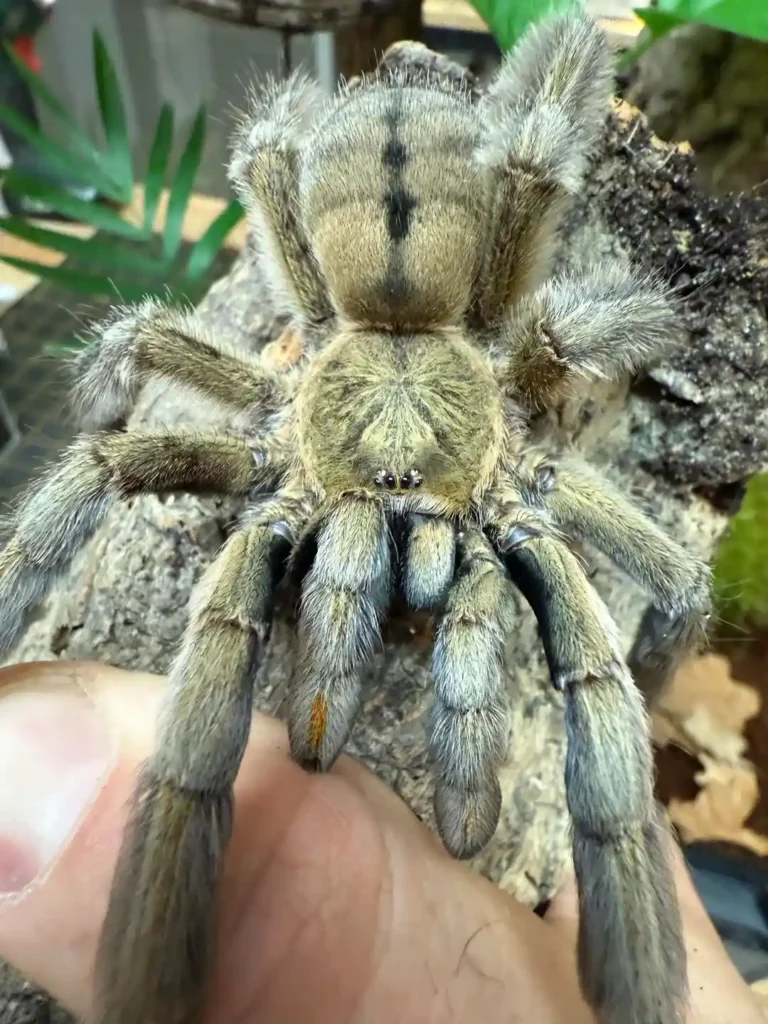
The Trinidad Chevron Tarantula has a slim body, long legs, and a graceful appearance that perfectly suits its arboreal lifestyle. Its most recognizable feature is the series of dark chevron-shaped markings across the abdomen, which inspired its common name.
Adults usually have a bronze to olive-brown carapace with long, slender legs that allow them to climb bark, branches, and enclosure walls with ease. Juveniles often display brighter colors and stronger contrast, gradually developing darker, more natural tones as they mature.
A healthy Psalmopoeus cambridgei should have a rounded abdomen, clear body markings, strong climbing ability, and a glossy exoskeleton after molting. Since this species lacks urticating hairs, it depends on speed and defensive posture rather than kicking hairs when threatened.
Scientific Classification
| Rank | Classification |
|---|---|
| Kingdom | Animalia |
| Phylum | Arthropoda |
| Class | Arachnida |
| Order | Araneae |
| Family | Theraphosidae |
| Genus | Psalmopoeus |
| Species | Psalmopoeus cambridgei |
The genus Psalmopoeus includes several popular arboreal tarantulas known for their speed, climbing ability, and heavy webbing. Unlike many New World tarantulas, species in this genus rely on agility instead of urticating hairs for defense.
Natural Habitat & Distribution
The Psalmopoeus cambridgei is found only on the Caribbean island of Trinidad, where it inhabits warm, humid tropical forests. It spends nearly its entire life above the ground, hiding inside hollow trees, behind loose bark, and within natural tree cavities.
These forests experience consistently warm temperatures, regular rainfall, and high humidity throughout the year. However, they also benefit from constant airflow beneath the forest canopy, preventing the environment from becoming stagnant. This combination of moisture and ventilation is one of the keys to successfully keeping the species in captivity.
Like most arboreal tarantulas, the Trinidad Chevron builds thick silk retreats around its hiding place. These web tunnels provide security, support successful molts, and help the spider detect nearby prey through vibrations. Recreating these conditions with a tall enclosure, cork bark, and climbing structures allows the species to display its natural behavior.
Why Keep the Trinidad Chevron Tarantula?
The Psalmopoeus cambridgei is an excellent choice for keepers looking for an active display species rather than a handling tarantula. It grows quickly, creates impressive web tunnels, and frequently emerges during the evening, giving owners plenty of opportunities to observe its natural behavior.
Reasons why hobbyists enjoy this species include:
- Fast growth
- Beautiful chevron markings
- Heavy web-building
- Excellent climbing ability
- Active nighttime behavior
- Hardy with proper care
- Long female lifespan
Its combination of beauty, intelligence, and fascinating behavior makes the Trinidad Chevron Tarantula one of the most rewarding arboreal species in the hobby.
Behavior & Temperament
Despite its reputation for incredible speed, Psalmopoeus cambridgei is generally shy and prefers escaping rather than fighting. When disturbed, it usually retreats into its web tunnel instead of standing its ground.
This species is highly alert and reacts quickly to movement around the enclosure. During maintenance, it may sprint behind cork bark or disappear into its retreat within seconds. Because of this, calm movements and careful enclosure maintenance are essential.
Unlike many New World tarantulas, the Trinidad Chevron Tarantula cannot defend itself by kicking urticating hairs. If cornered with no escape route, it may raise its front legs or display its fangs as a warning before attempting to flee. Actual bites are uncommon and usually occur only when the spider feels trapped.
One of the most fascinating behaviors of P. cambridgei is its web-building ability. Instead of covering the enclosure with random silk, it creates organized tunnels, retreats, and anchor lines connecting different climbing areas. These structures become more elaborate over time and provide a safe place for resting, hunting, and molting.
The species is primarily nocturnal, spending most daylight hours hidden before becoming active after dark. A well-established Psalmopoeus cambridgei often appears more confident and visible once it has constructed a secure web retreat, making it an outstanding display tarantula for keepers who enjoy observing natural behaviors.
Enclosure Setup
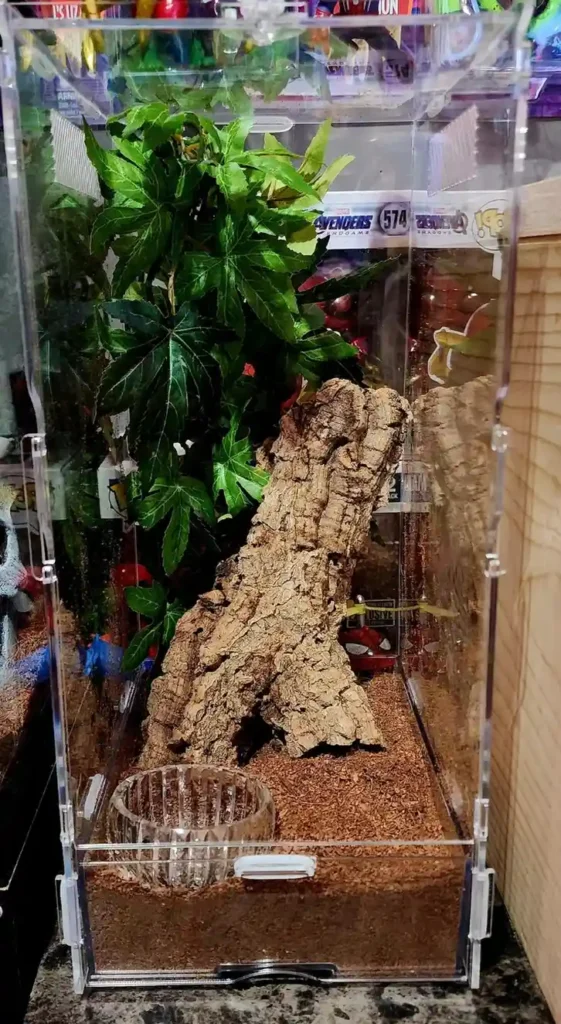
Creating the right enclosure is the foundation of successful Psalmopoeus cambridgei care. As a true arboreal species, the Trinidad Chevron Tarantula spends most of its life climbing, hiding inside web retreats, and hunting from elevated positions. A well-designed habitat should provide plenty of vertical space, secure hiding spots, and good airflow while maintaining stable humidity.
Unlike terrestrial tarantulas, this species rarely uses the ground except for drinking or exploring. Recreating its natural tree-dwelling environment will help reduce stress and encourage natural behaviors such as climbing, web-building, and hunting.
Choosing the Right Enclosure
Glass, acrylic, and PVC enclosures all work well as long as they provide excellent ventilation and enough height for climbing. Front-opening enclosures are often preferred because they make feeding and maintenance easier without disturbing the tarantula’s web retreat.
Whichever enclosure you choose, ensure it has a secure locking lid. Psalmopoeus cambridgei is incredibly fast and can escape through surprisingly small openings.
Enclosure Size
A tall enclosure is far more important than a large floor area.
| Life Stage | Recommended Enclosure Size |
|---|---|
| Spiderling | 3 × 3 × 6 inches |
| Juvenile | 6 × 6 × 8 inches |
| Adult | 8 × 8 × 12 inches or larger |
Providing additional height allows the spider to build natural web retreats while giving you a better opportunity to observe its climbing behavior.
Vertical Space & Climbing Structures
Vertical climbing surfaces are essential for this species. Without them, the tarantula cannot display its normal behavior. Suitable climbing materials include:
- Cork bark tubes
- Spider wood
- Natural branches
- Artificial vines
- Twisted driftwood
Arrange these decorations securely so they cannot shift or collapse. They also act as anchor points for the spider’s webbing, allowing it to create extensive silk tunnels throughout the enclosure.
Substrate
Although Psalmopoeus cambridgei rarely burrows, substrate helps retain moisture and maintain humidity. Suitable substrate choices include:
- Coconut fiber (Coco Coir)
- Organic topsoil
- Peat moss
- Reptile-safe bioactive substrate
A depth of 2–4 inches (5–10 cm) is usually sufficient. Keep one area slightly damp while allowing the surface to dry naturally between waterings. Avoid substrates containing fertilizers, pesticides, or scented additives.
Cork Bark & Hides
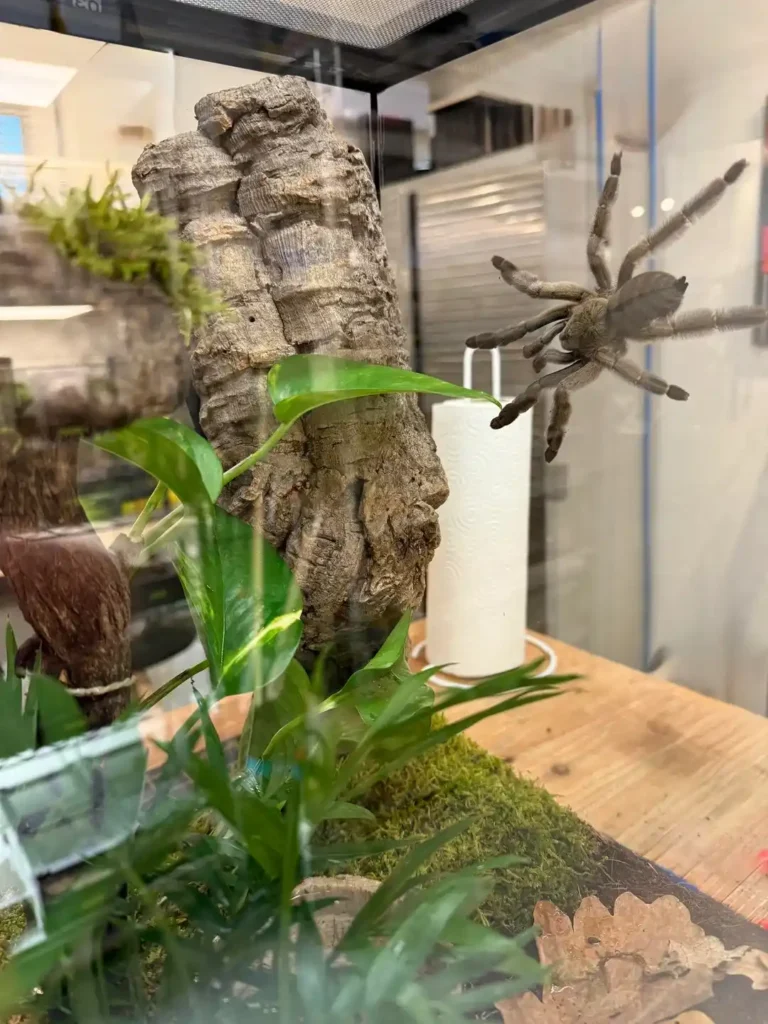
A vertical cork bark slab is one of the most important items inside the enclosure. In nature, the Trinidad Chevron Tarantula hides beneath loose bark and inside tree cavities. Providing a large piece of cork bark gives it an immediate shelter where it can establish a secure web retreat.
Most specimens spend their first few days reinforcing this hide with silk before becoming more active around the enclosure.
Live or Artificial Plants
Plants improve both the appearance and functionality of the enclosure. Artificial plants require little maintenance and provide extra climbing surfaces, while live tropical plants can help stabilize humidity in bioactive setups. Popular live plants include:
- Pothos
- Philodendron
- Small ferns
- Mosses
Avoid plants treated with pesticides or chemical fertilizers.
Ventilation
Good ventilation is just as important as humidity. Poor airflow can lead to:
- Mold growth
- Stale air
- Excess condensation
- Bacterial buildup
Cross ventilation allows fresh air to circulate while maintaining healthy humidity levels. A well-ventilated enclosure is much safer than one that remains constantly damp.
Water Dish
Always provide a shallow water dish filled with clean, fresh water. Even though this species comes from a humid environment, it still drinks regularly. Replace the water every few days and clean the dish whenever substrate or feeder insects fall inside.
Temperature & Humidity
Providing stable environmental conditions helps keep Psalmopoeus cambridgei healthy, active, and able to molt successfully. Fortunately, this species adapts well to normal indoor temperatures when its enclosure is properly maintained.
Ideal Temperature Range
The recommended temperature is:
- Day: 74–80°F (23–27°C)
- Night: 70–74°F (21–23°C)
Avoid prolonged exposure below 68°F (20°C) or above 84°F (29°C). Never place the enclosure in direct sunlight, near heaters, or beside air-conditioning vents where temperatures fluctuate rapidly.
Ideal Humidity Range
Aim for a humidity level between 70% and 80%. Instead of constantly misting the enclosure, maintain slightly moist substrate and keep the water dish full.
This provides steady humidity without creating overly wet conditions. Spiderlings usually appreciate slightly higher humidity because they lose moisture more quickly than adults.
Maintaining Proper Conditions
Simple husbandry practices are usually enough to maintain a healthy environment.
- Keep one corner of the substrate slightly moist.
- Allow the upper layer to dry gradually.
- Refill the water dish regularly.
- Ensure good cross ventilation.
- Avoid soaking the entire enclosure.
These methods provide a stable environment that closely resembles the natural habitat of the Trinidad Chevron Tarantula.
Feeding Guide
The Psalmopoeus cambridgei is an enthusiastic predator with a strong feeding response. In the wild, it waits near the entrance of its web retreat before launching a rapid attack on passing insects. Watching this hunting behavior is one of the highlights of keeping this species.
A varied diet helps ensure balanced nutrition while supporting healthy growth and successful molts.
Feeding Spiderlings
Spiderlings grow quickly and should be fed every 3–4 days. Suitable prey includes:
- Pinhead crickets
- Small roach nymphs
- Flightless fruit flies
- Pre-killed insects for tiny slings
Offer prey that is no larger than the spiderling’s body.
Feeding Juveniles
Juveniles become confident hunters and can eat larger prey. Feed every 5–7 days using:
- Small crickets
- Dubia roaches
- Red runner roaches
- Small locusts
This is usually the fastest growth stage, especially when temperatures remain stable.
Feeding Adults
Adult Trinidad Chevron Tarantulas require fewer meals. Feed every 7–10 days with one or two appropriately sized insects depending on body condition. Avoid overfeeding simply because the tarantula continues accepting food.
Best Feeder Insects
A varied diet is healthier than feeding only one prey item. Recommended feeders include:
- Dubia roaches
- Crickets
- Red runner roaches
- Locusts
- Mealworms (occasionally)
- Superworms (occasionally)
Dubia roaches are often considered the best staple feeder because they are nutritious, easy to digest, and unlikely to injure the spider if left briefly in the enclosure. Never feed wild-caught insects, as they may carry parasites or pesticide residues.
Feeding Tips
- Remove uneaten prey within 24 hours.
- Do not feed during premolt.
- Offer prey appropriate to the spider’s size.
- Keep fresh water available at all times.
- Monitor abdomen size instead of feeding on a strict schedule.
A healthy Psalmopoeus cambridgei may occasionally refuse food before molting, after rehousing, or during seasonal changes. This is usually normal as long as the abdomen remains healthy.
Molting Guide
Molting allows Psalmopoeus cambridgei to grow, regenerate damaged body parts, and replace its old exoskeleton. Young spiderlings molt frequently, while adults may molt only once every year or two.
Signs of Premolt
Common signs include:
- Refusing food
- Reduced activity
- Spending more time inside the web retreat
- Duller body coloration
- Increased webbing
Some individuals completely seal themselves inside their silk tunnel before molting. This behavior is perfectly normal.
Care During Molting
Never disturb a molting tarantula. Keep the enclosure quiet, maintain stable humidity, and ensure fresh water remains available. Avoid feeding until the molt has been completed and the new exoskeleton has hardened.
When to Feed After Molting
Wait until the fangs become completely black before offering food.
General guideline:
- Spiderlings: 5–7 days
- Juveniles: 7–10 days
- Adults: 10–14 days
Feeding too early can damage the spider’s soft fangs and increase the risk of injury.
Growth Rate & Lifespan
The Psalmopoeus cambridgei is one of the faster-growing arboreal tarantulas, making it a popular choice for keepers who enjoy watching their spider develop from a tiny spiderling into an impressive adult. Growth speed depends on feeding, temperature, genetics, and overall husbandry, but under proper conditions, this species matures much quicker than many terrestrial tarantulas.
Growth Rate
Spiderlings grow rapidly during their first year and molt regularly as long as they receive a balanced diet and stable environmental conditions. Most juveniles begin showing adult coloration after several molts, while females continue growing for a few years before reaching their maximum size.
| Life Stage | Approximate Size |
|---|---|
| Spiderling | 0.5–1 inch |
| Juvenile | 2–4 inches |
| Subadult | 4–5.5 inches |
| Adult | 6–7 inches |
Keep in mind that individual growth rates vary, so some specimens mature faster than others.
Male Lifespan
Male Psalmopoeus cambridgei generally live 3–4 years. After reaching maturity, they stop growing and begin searching for females. Mature males often become thinner, eat less frequently, and spend more time wandering around the enclosure.
Female Lifespan
Female Trinidad Chevron Tarantulas can live 12–15 years or even longer with proper care. Their longer lifespan makes them a better choice for hobbyists looking for a long-term pet.
Providing clean water, proper humidity, a suitable enclosure, and a balanced feeding schedule all contribute to a healthier, longer-lived tarantula.
Handling & Safety
Although the Psalmopoeus cambridgei is not considered an aggressive species, handling is generally discouraged. Its incredible speed makes accidental escapes much more likely than with slower tarantulas.
Can You Handle a Trinidad Chevron Tarantula?
Technically, yes—but it is not recommended.
Unlike calmer terrestrial species, the Trinidad Chevron can sprint across your hand or disappear in seconds if startled. Even experienced keepers usually avoid handling because the risks outweigh the benefits.
There is also a danger to the spider itself. A fall from even a short height can seriously injure or kill a tarantula by rupturing its abdomen. For these reasons, Psalmopoeus cambridgei is best appreciated as a display species.
Venom & Defensive Behavior
Like all tarantulas, Psalmopoeus cambridgei uses venom to subdue prey. While its venom is not considered medically significant for most healthy adults, a bite can be painful and may cause swelling or discomfort.
Before biting, the spider usually gives several warning signs:
- Retreating into its hide
- Raising its front legs
- Displaying its fangs
- Attempting to escape
Bites are uncommon and usually occur only when the spider feels trapped with no way to retreat.
Safety Tips
To reduce stress and prevent accidents:
- Open the enclosure slowly.
- Use long feeding tongs.
- Keep a catch cup nearby during maintenance.
- Avoid sudden movements.
- Never handle the spider after feeding or during premolt.
Respecting the spider’s natural behavior is the safest approach for both the keeper and the tarantula.
Rehousing Guide
As Psalmopoeus cambridgei grows, it will eventually outgrow its enclosure. Upgrading to a larger habitat before space becomes limited helps maintain healthy growth and encourages natural climbing behavior.
When to Upgrade the Enclosure
Consider rehousing when:
- The tarantula has little room to climb.
- Webbing fills most of the enclosure.
- The spider appears cramped.
- The enclosure becomes difficult to clean.
Juveniles usually require enclosure upgrades more frequently because of their rapid growth.
Safe Rehousing Tips
Rehousing an arboreal tarantula requires patience and preparation.
Helpful tips include:
- Prepare the new enclosure before opening the old one.
- Use a clear catch cup to guide the spider.
- A soft paintbrush can gently encourage movement without causing harm.
- Work in a small, escape-proof room whenever possible.
- Avoid rehousing during premolt or immediately after a molt.
Moving slowly and allowing the spider to choose its direction usually results in a smoother rehousing process.
Breeding
Breeding Psalmopoeus cambridgei is generally recommended for experienced keepers who understand tarantula behavior and reproductive cycles.
Sexual Maturity
Males mature much earlier than females. Once mature, males develop tibial hooks and begin searching for mates, while females continue growing and may not mature for several additional molts.
Pairing Process
The female should be well-fed before pairing to reduce the risk of cannibalism. Introduce the mature male carefully and monitor the interaction closely. If the female responds positively, mating usually occurs quickly before the male retreats.
Egg Sac Development
After a successful pairing, the female may produce an egg sac within several weeks or months, depending on environmental conditions. She typically guards the egg sac inside her web retreat until the eggs develop into spiderlings.
Spiderling Care
Once the spiderlings emerge, they should be separated into individual containers to prevent cannibalism. Young Psalmopoeus cambridgei grow quickly when provided with:
- Slightly higher humidity
- Small feeder insects
- Good ventilation
- Secure climbing surfaces
Regular feeding and clean conditions help support healthy development during the early growth stages.
Common Care Mistakes
Even though the Trinidad Chevron Tarantula is considered a hardy species, a few common husbandry mistakes can lead to unnecessary stress or health problems.
Keeping the Enclosure Too Wet
Many beginners assume tropical tarantulas require constantly wet substrate. In reality, excessive moisture combined with poor ventilation encourages mold and unhealthy conditions. Keep part of the substrate slightly moist instead of soaking the entire enclosure.
Poor Ventilation
Fresh airflow is just as important as humidity. Without proper ventilation, stale air and condensation can quickly develop, increasing the risk of mold and bacterial growth.
Incorrect Enclosure Size
Short terrestrial enclosures prevent Psalmopoeus cambridgei from climbing and building natural web retreats. Always choose a tall enclosure with plenty of vertical space.
Overhandling
Handling increases the risk of escape and injury for both the keeper and the spider. Observing the tarantula inside its enclosure is a much safer and more enjoyable experience.
Overfeeding or Underfeeding
Feeding too often can produce an oversized abdomen, while feeding too little may slow growth in young spiders. Offer appropriately sized prey and adjust the schedule according to the spider’s body condition.
Is Psalmopoeus cambridgei Beginner Friendly?
Although Psalmopoeus cambridgei is relatively hardy, it is usually recommended for intermediate keepers because of its speed and defensive behavior.
Pros
- Fast-growing species
- Beautiful natural markings
- Active display tarantula
- Heavy web-builder
- Hardy when kept correctly
Cons
- Extremely fast
- Not suitable for handling
- Requires a tall arboreal enclosure
- Can become defensive if cornered
- Rehousing requires confidence and planning
If you already have experience with calmer arboreal tarantulas, the Trinidad Chevron is an excellent next step.
Frequently Asked Questions (FAQ)
Is Psalmopoeus cambridgei venomous?
Yes. Like all tarantulas, it has venom used for hunting prey. While a bite is painful, it is generally not considered medically significant for healthy adults.
How big does a Trinidad Chevron Tarantula get?
Adult females typically reach 6–7 inches (15–18 cm), while mature males are usually slightly smaller.
How often should I feed Psalmopoeus cambridgei?
Spiderlings should be fed every 3–4 days, juveniles every 5–7 days, and adults every 7–10 days, depending on body condition.
Does Psalmopoeus cambridgei need high humidity?
A humidity level of 70–80% with good ventilation is ideal. Constantly wet substrate should be avoided.
Does this species build a lot of webbing?
Yes. One of its most distinctive traits is building thick silk retreats, web tunnels, and anchor lines throughout the enclosure.
Can two Trinidad Chevron Tarantulas live together?
No. This is a solitary species, and housing multiple individuals together can result in fighting or cannibalism.
Final Thoughts
The Psalmopoeus cambridgei is an outstanding arboreal tarantula that combines speed, beauty, and fascinating natural behavior. Its impressive web-building skills, rapid growth, and striking chevron pattern make it a favorite among experienced hobbyists looking for an active display species.
Success with the Trinidad Chevron Tarantula comes from recreating its natural environment. A tall enclosure, secure cork bark retreat, proper ventilation, moderate humidity, and a varied diet allow this species to thrive for many years. While it is not recommended for frequent handling, patient keepers are rewarded with a confident tarantula that displays remarkable climbing and hunting behaviors.
If you’re ready to care for a fast-moving arboreal species and appreciate observing natural behavior over handling, Psalmopoeus cambridgei is one of the most rewarding tarantulas you can add to your collection.