Mexican Red Knee Tarantula Care: Complete Beginner Guide
What Is the Mexican Red Knee Tarantula?
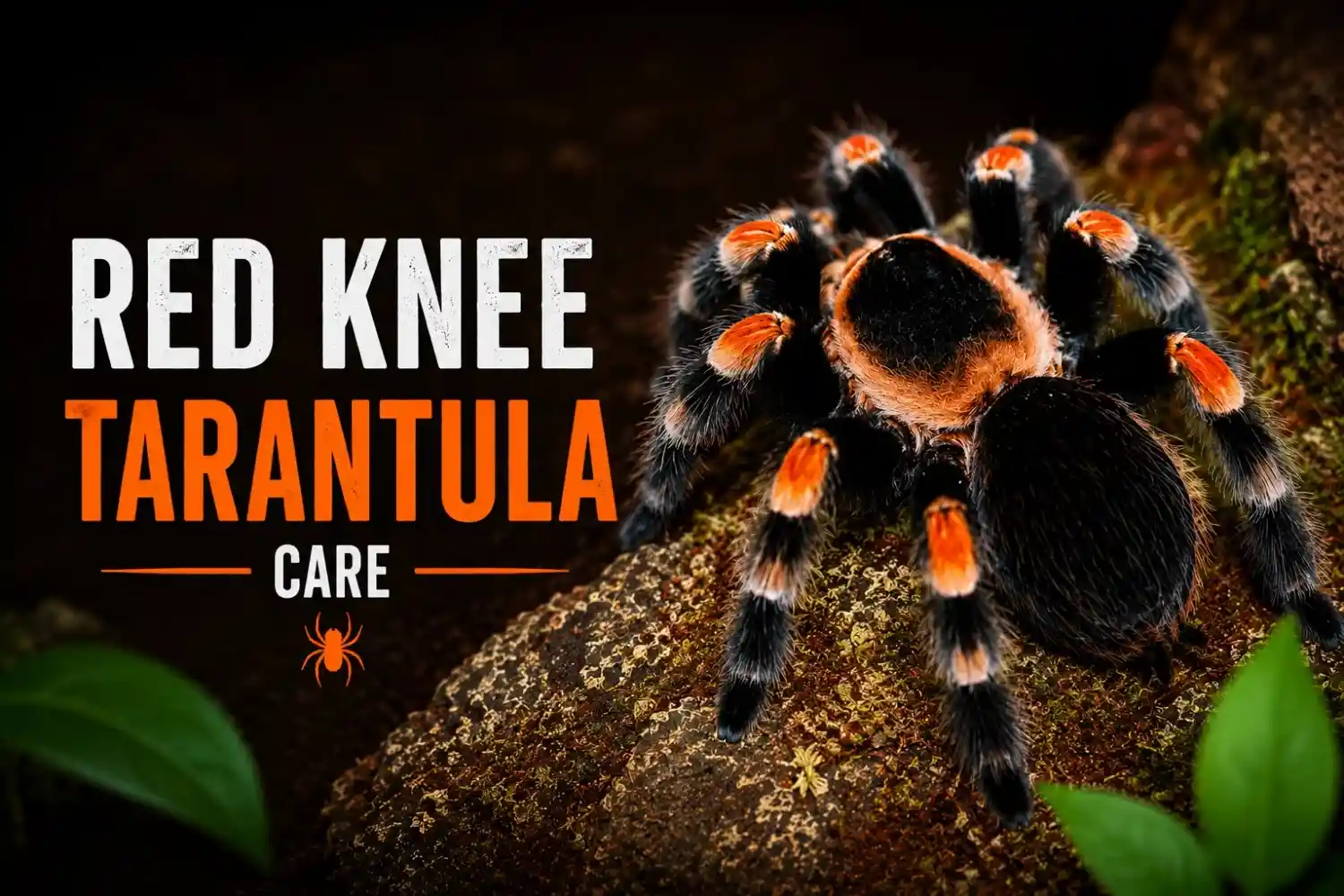
The Mexican Red Knee Tarantula is a large, ground-dwelling spider native to the Pacific coast of Mexico. It gets its name from the bright orange-red bands on its leg joints, which contrast with a deep black body. Keepers love this species for three reasons: it looks stunning, it has a calm personality, and it lives for decades.
This spider belongs to the family Theraphosidae. It was first described in 1897 under the name Brachypelma smithi. In 1997, scientists identified a second, very similar species and named it Brachypelma hamorii. In 2017, a major DNA study by Mendoza and Francke finally sorted out which spiders belonged to which species. Today, most “Mexican Red Knee” tarantulas in the hobby are B. hamorii, even though pet shops often still use the old name B. smithi.
Is Your “Red Knee” Actually a Red Knee? (B. smithi vs. B. hamorii)
This is the one thing most care guides get wrong or skip, so it is worth getting right. Both species look nearly identical to the untrained eye, and the difference is mostly internal anatomy and geography, not color:
- B. hamorii is the common hobby spider. It lives north of the Balsas River in the states of Colima, Jalisco, and Michoacán.
- B. smithi (the “true” Smith’s Red Knee) lives south of the river, in Guerrero, and is far rarer in the trade.
You usually cannot tell them apart from color alone. Reliable identification comes from mature specimens: the shape of the male’s palpal bulb and the female’s spermatheca (visible in a molt) distinguish them, and DNA barcoding confirms it. The practical takeaway for a keeper is simple: both species need identical care, so mislabeling does not affect how you look after the spider. It only matters for accurate buying and breeding.
Mexican Red Knee Tarantula Quick Facts
| Feature | Detail |
|---|---|
| Scientific name | Brachypelma hamorii (most common) or B. smithi |
| Common names | Mexican Red Knee, Mexican Redknee |
| Family | Theraphosidae |
| Native range | Pacific coast of Mexico |
| Adult size | About 5 inch leg span (up to ~13 cm) |
| Body length | 2 to 2.5 inches |
| Female lifespan | 25 to 30 years |
| Male lifespan | 5 to 10 years |
| Temperament | Docile, calm, slow-moving |
| Venom risk to humans | Very mild, similar to a bee sting |
| IUCN status | Vulnerable (B. hamorii) |
| CITES listing | Appendix II |
| Experience level | Beginner-friendly |
| Price range | $50 to $150 (captive-bred) |
Appearance: How to Identify a Mexican Red Knee
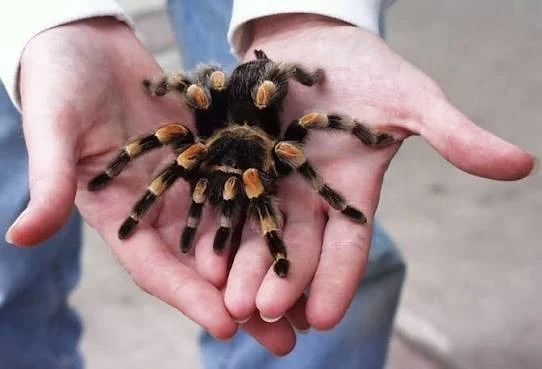
Adult Mexican Red Knees are easy to spot. The body is jet black. Each leg has three bright orange or red bands, with the most visible band sitting on the “knee” (the patella joint). The carapace, the shield-like plate on the head, shows a cream or pink border, sometimes with a starburst pattern in females. Juveniles look duller until they reach around 3 inches in size, when their colors fully develop.
Females are stockier, with shorter legs and larger abdomens. Mature males have longer, thinner legs and develop small hooks on their front legs (called tibial hooks) used during mating.
Is the Mexican Red Knee Tarantula Dangerous?
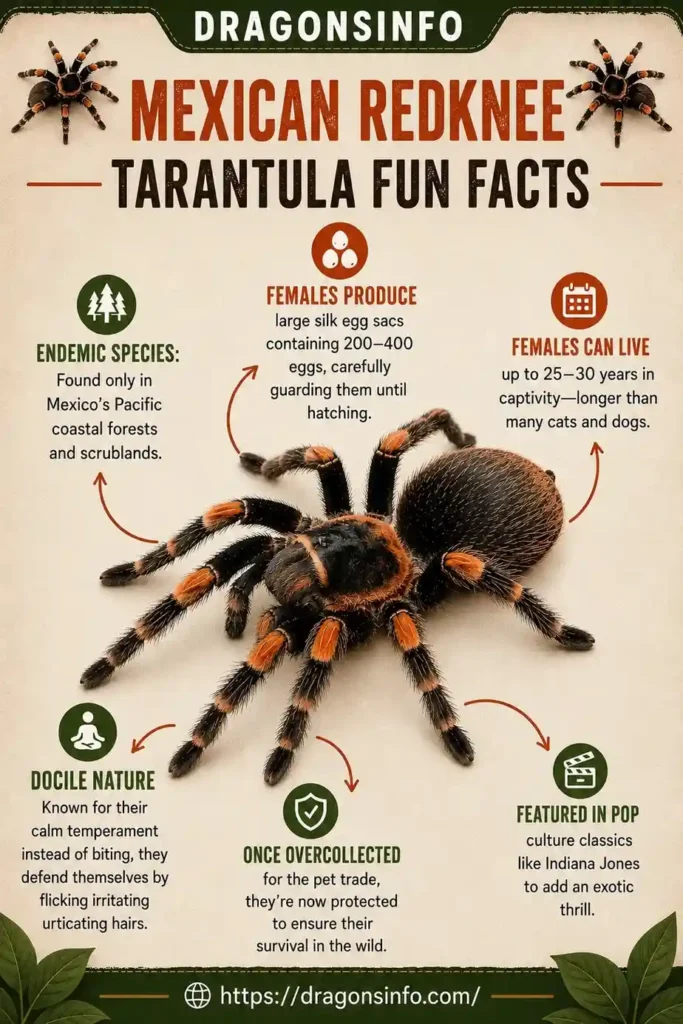
No. The Mexican Red Knee Tarantula is not dangerous to humans. Its venom is mild and causes only minor swelling, similar to a bee sting. It rarely bites unless cornered or squeezed.
Its main defense is urticating hairs. When the spider feels threatened, it uses its back legs to flick tiny barbed hairs off its abdomen. These hairs can irritate human skin and eyes. If they get into your eyes, the irritation can be severe, so always wash your hands after working in the enclosure and avoid rubbing your face.
This species is one of the most docile tarantulas in the hobby. It would rather hide or kick hair than bite. Still, tarantulas are not social animals and do not enjoy being held, so keep handling to a minimum.
Natural Habitat and Behavior
In the wild, Mexican Red Knees live in dry tropical forests, scrublands, and grasslands on the western side of Mexico. They dig deep burrows under rocks, logs, and thorny bushes. These burrows protect them from predators and from the harsh midday sun.
The spider is nocturnal. It spends the hot day resting inside its burrow. At night, it sits near the entrance and waits for prey. When an insect passes by, the spider senses vibrations through tiny hairs on its legs, rushes out, grabs the prey with its fangs, and drags it into the burrow to eat.
Females almost never leave their burrows. Males, once mature, wander long distances to find mates during the rainy season.
How to Set Up a Mexican Red Knee Tarantula Enclosure
Enclosure Size
Mexican Red Knees are terrestrial. They need more floor space than height. The general rule is that the enclosure should be about three times the spider’s leg span in length and two times in width.
- Spiderlings (under 1 inch): small acrylic container, around 3 x 2 x 2 inches.
- Juveniles (1 to 3 inches): 6 x 6 x 6-inch enclosure.
- Adults (over 3 inches): 10 to 12 inches wide, such as a 5 or 10 gallon tank laid on its side.
Always use a secure, escape-proof lid with small ventilation holes. Tarantulas can climb glass, and a fall from height can rupture their abdomens and kill them.
Substrate
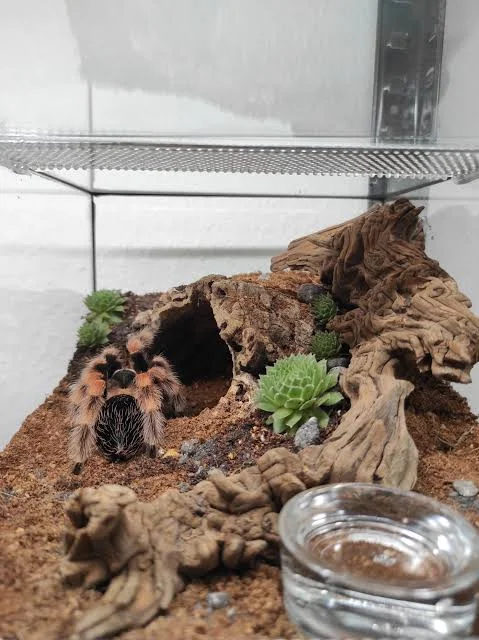
Use 3 to 5 inches of dry coco fiber, peat moss, or topsoil. Deep substrate lets the spider burrow, which it enjoys even in captivity. Avoid sand, gravel, or cedar-based substrates, as these can injure the spider.
Hide and Decor
Add a half-cork-bark log or a clay flowerpot as a hide. Place it on one side so the spider has a secure retreat. You can add a few fake plants or leaves for cover, but keep the setup simple. Avoid sharp rocks or tall decor that the spider could fall from.
Water Dish
Always provide a shallow water dish large enough for the spider to drink from, but not so deep that it can drown. A small ceramic dish works well. Refill with clean water every few days.
Temperature
Keep the enclosure between 70°F and 78°F (21°C to 26°C), which is normal room temperature in most homes. You do not need a heat lamp unless your room drops below 65°F at night. If heating is needed, use a low-wattage heat mat on the side of the enclosure, not the bottom, and always with a thermostat.
Humidity
Mexican Red Knees come from dry regions and are very tolerant of low humidity, so do not overthink this. A full water dish does most of the work, and mostly dry substrate is exactly what this species wants. If your home is especially dry, you can lightly dampen one corner of the substrate now and then, but never mist the spider directly and never keep the enclosure wet. Damp, stuffy conditions cause far more harm to this species than dry ones.
Feeding Your Mexican Red Knee Tarantula
| Life Stage | Feeding Frequency | Prey Size |
|---|---|---|
| Spiderling (under 1 inch) | 2 times per week | Flightless fruit flies, pinhead crickets |
| Juvenile (1 to 3 inches) | Once every 7 to 10 days | Small crickets, small dubia roaches |
| Adult (over 3 inches) | Once every 2 to 3 weeks | 3 to 5 large crickets or 1 large roach |
The best feeder insects are crickets, dubia roaches, mealworms, and superworms. Offer prey no larger than the spider’s abdomen. Remove any uneaten prey within 24 hours, since live crickets can stress or even bite a molting tarantula.
Fasting is normal. Adults may refuse food for weeks or even months, especially before a molt. Do not panic. As long as the spider has water and its abdomen is plump, it is fine.
Never feed after a molt until the fangs harden. Wait 3 to 7 days for juveniles and 7 to 14 days for adults.
Handling: Should You Hold Your Tarantula?
Most experienced keepers agree: do not handle your tarantula. Here is why.
Tarantulas do not bond with their owners and do not enjoy being held. A fall of just a few inches can rupture the abdomen, which is almost always fatal. Handling also stresses the spider and increases the chance of a bite or a hair-kicking incident.
If you must move the spider, for example during a cage cleaning, use a soft paintbrush or a deli cup. Gently coax it into the cup rather than picking it up with your hands.
How to Tell if Your Mexican Red Knee Is Male or Female
Because females live 25 to 30 years and males only 5 to 10, sexing matters a great deal to buyers. The most reliable method is checking a shed molt: females have an internal sperm-storage structure (the spermatheca) visible on the underside of the molt, which males lack. Mature males are also easy to spot by their longer, thinner legs and the small tibial hooks on their front legs. If lifespan matters to you, buy a confirmed female or a spider old enough to sex from a molt, and ask the seller directly.
Molting: What to Expect
Molting is how tarantulas grow. The spider sheds its old exoskeleton to reveal a new, larger one underneath. Spiderlings molt every few weeks, juveniles every few months, and adult females only once a year or less.
Signs of an upcoming molt:
- The spider stops eating for days or weeks.
- The abdomen darkens and looks bald or shiny.
- The spider may seal itself in its burrow.
- It flips onto its back. This is normal, so do not touch it.
The full molt takes several hours. Do not disturb the spider during this time. Afterward, the spider is soft and vulnerable, so wait at least a week before feeding.
Common Health Problems and How to Avoid Them
Dehydration. The most common cause of death in captivity. Always keep fresh water in the dish.
Fall injuries. A tall enclosure is a death trap. Keep height under 1.5 times the spider’s leg span.
Mites and fungus. Usually caused by damp substrate and uneaten prey. Remove food waste quickly and keep the enclosure mostly dry.
Dyskinetic Syndrome (DKS). A neurological condition causing twitching and loss of coordination. The cause is debated but may involve pesticides, chemical exposure, or poor diet. Prevent it by avoiding cleaning sprays near the enclosure and feeding only store-bought, chemical-free insects.
Bald abdomen. Not a disease. The spider flicks hairs when stressed, leaving a bald patch. The hairs grow back at the next molt.
Breeding Mexican Red Knee Tarantulas
Breeding this species is slow and challenging. Females mature at 8 to 12 years. Males mature at 4 to 7 years and live only about a year after maturity.
To pair, introduce the male into the female’s enclosure at night. The male drums his legs to signal. If she is receptive, mating takes a few minutes. Remove the male immediately, since females sometimes attack after mating.
If successful, the female lays 400 to 800 eggs in a silk sac about 4 to 6 months later. Keep humidity at 60 to 70% and temperature around 75°F. Spiderlings emerge after 8 to 10 weeks.
Because this species is CITES-protected, responsible captive breeding helps reduce pressure on wild populations.
How Much Does a Mexican Red Knee Tarantula Cost?
| Item | Approximate Cost (USD) |
|---|---|
| Spiderling | $30 to $60 |
| Juvenile | $60 to $100 |
| Adult female | $100 to $200 |
| Enclosure (adult) | $30 to $60 |
| Substrate, hide, water dish | $20 to $40 |
| First-year food | $50 to $80 |
| Total first-year cost | $200 to $400 |
The ongoing yearly cost after setup is very low, usually under $60 for food.
Where to Buy a Mexican Red Knee Tarantula
Always buy captive-bred specimens from trusted sources. Wild-caught tarantulas are easily stressed, may carry parasites, and contribute to population decline. Good options include:
- Reputable breeders listed on the British Tarantula Society or American Tarantula Society websites.
- Specialty reptile expos, where you can inspect the spider in person.
- Licensed online dealers with clear CITES paperwork.
Avoid big-box pet chains, since their stock is often wild-caught or mislabeled.
Conservation Status
The IUCN Red List classifies Brachypelma hamorii as Vulnerable. Habitat loss from farming and development is the biggest threat. Illegal smuggling for the pet trade remains a serious problem, with thousands of wild-caught spiders shipped overseas every year.
All Brachypelma species are listed on CITES Appendix II, which means international trade requires permits. This is why buying from CITES-registered, captive-breeding sources matters so much.
Mexican Red Knee vs. Similar Species
| Species | Common Name | Main Difference |
|---|---|---|
| B. hamorii | Mexican Red Knee | Most common in hobby, 3 orange bands per leg |
| B. smithi | True Red Knee (Smith’s) | Nearly identical, found south of Balsas River |
| B. emilia | Mexican Red Leg | Only 2 leg bands, pink triangle on carapace |
| B. boehmei | Mexican Fire Leg | More red-orange across entire leg |
| B. auratum | Mexican Flame Knee | Bright red band outlined in white |
Beginner Mistakes to Avoid
- Using a tall enclosure. Adult tarantulas are ground-dwellers, and tall tanks cause fatal falls.
- Keeping the substrate too wet. Leads to mold, mites, and respiratory issues.
- Handling too often. Stressful for the spider and risky for you.
- Feeding too soon after a molt. Soft fangs can tear, so always wait.
- Buying from unknown sources. Wild-caught spiders often die within a year from import stress.
- Using heat rocks or lamps inside the enclosure. These dry out the spider and can burn it.
Frequently Asked Questions
Is a Mexican Red Knee tarantula good for beginners?
Yes. It is calm, slow-moving, hardy, and has simple care needs. It is widely considered the best beginner tarantula.
How long do Mexican Red Knee tarantulas live?
Females live 25 to 30 years, while males live only 5 to 10 years and about a year after maturity. Because the difference is so large, ask the seller about the spider’s sex before buying if lifespan matters to you.
Are Mexican Red Knee tarantulas dangerous or aggressive?
No. They are one of the calmest tarantula species and are not dangerous to humans. They are not poisonous, only mildly venomous, with a bite comparable to a bee sting, and no human deaths have ever been recorded. They almost always flee or flick urticating hairs rather than bite. People with insect-sting allergies should still take normal care.
Do Mexican Red Knee tarantulas need a heat lamp?
Usually no. Normal room temperature (70 to 78°F) is fine. Only add a heat mat with a thermostat if your room drops below 65°F.
How often should I feed my Mexican Red Knee?
Spiderlings eat twice a week, juveniles every 7 to 10 days, and adults every 2 to 3 weeks. Skip feeding before and after a molt.
Why is my tarantula not eating?
The most common reason is an upcoming molt, and adults can also fast for weeks or months for no worrying reason. As long as water is available and the abdomen is plump, it is healthy.
What should I do if my tarantula flips onto its back?
Do not touch it. This is normal molting behavior, and the spider will right itself within a few hours. Remove any live prey from the enclosure while it molts.
Can I house two tarantulas together?
No. Mexican Red Knees are solitary and cannibalistic. Housing two together almost always ends with one eating the other.
Do Mexican Red Knee tarantulas burrow?
Yes, especially as spiderlings and juveniles. Provide 3 to 5 inches of dry substrate so they can dig naturally in captivity.
Is B. smithi the same as B. hamorii?
No, but they were treated as one species until 2017. Most tarantulas sold as “Mexican Red Knee” today are actually B. hamorii. Both need identical care.
Final Thoughts
The Mexican Red Knee Tarantula is a rewarding pet for anyone willing to respect its needs. It is quiet, inexpensive to maintain, stunningly beautiful, and can share your home for decades. Give it a simple, dry enclosure, fresh water, a calm environment, and occasional feedings, and it will thrive with very little effort.
If you are just starting in the hobby, this is the species most experienced keepers recommend first, and for good reason. Start with a captive-bred juvenile, learn to read your spider’s behavior, and enjoy one of nature’s most elegant arachnids.